
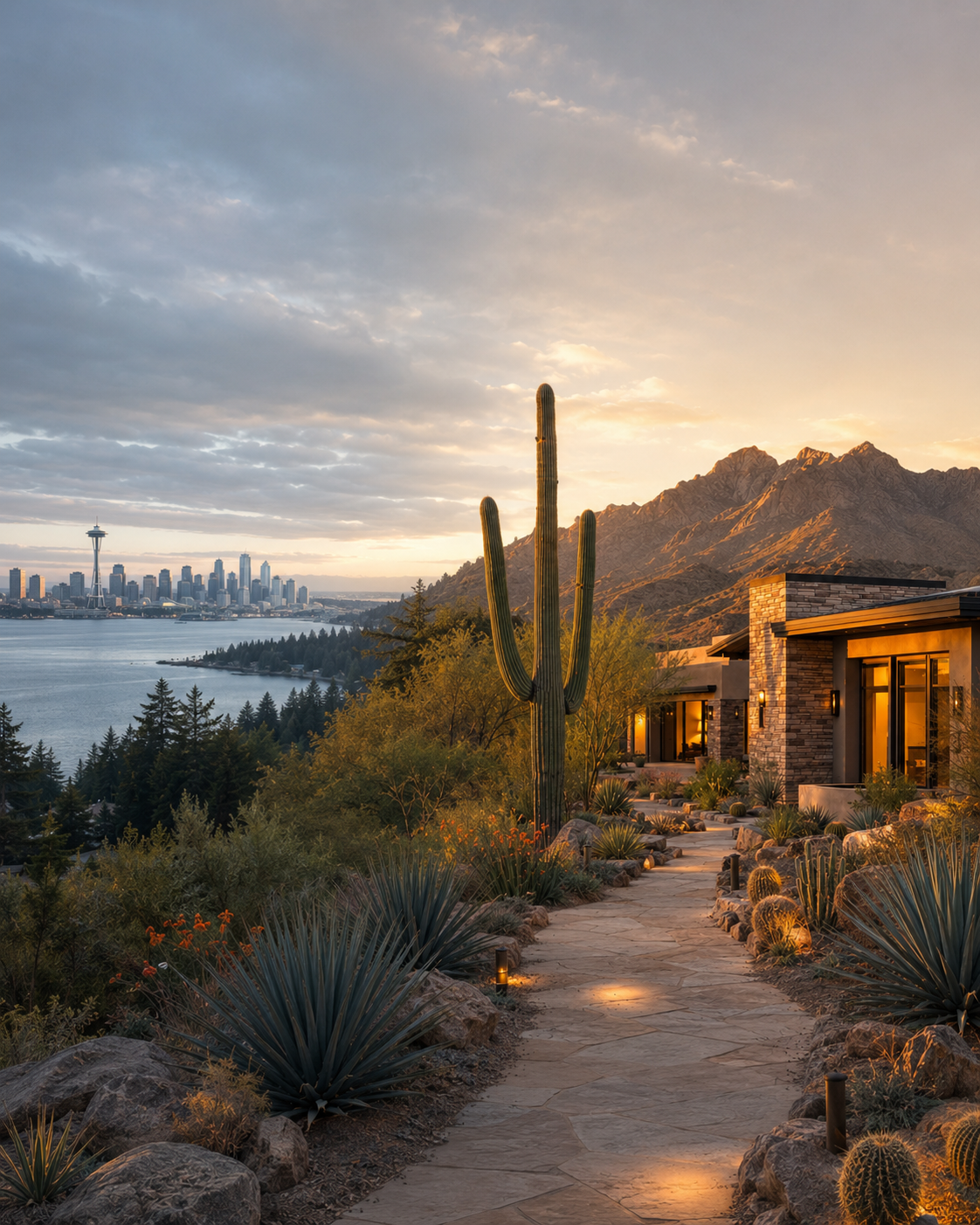
Moving to Tucson
What to know before you make the move.
Compare areas, understand the real costs and plan for desert living—wherever you are moving from.
Plan the life before you choose the house.
Moving to Tucson starts with three decisions: what you can comfortably spend, where your daily life will happen and whether desert living fits the routine you want.
Sarah and I moved from the Seattle area to Tucson in July. Yep, July. I understand the appeal of a different next chapter, and I also understand why the practical questions deserve time before you commit.
This guide is for people coming from anywhere. Start with your budget and regular destinations, compare a few realistic areas and use a scouting visit to test an ordinary week. Groceries, the drive to work and a summer afternoon will tell you something a listing photo cannot.
The useful question is what life will look like on an ordinary Tuesday, after the moving boxes are gone.
What does it cost to live in Tucson?
Build a budget for your household and the property you are considering. A regional average cannot tell you what your particular move will cost.
If you are renting
Compare rent, required fees, deposits, utilities, parking, pet terms and lease length. Confirm which expenses the landlord covers and which become your responsibility.
If you are buying
Include mortgage payments, taxes, insurance quotes, HOA dues, cooling, maintenance and any pool, irrigation or solar obligations. Ask for available utility history and equipment records.
During the transition
Add mover quotes, travel, deposits, temporary housing, storage and any overlap between homes. Price your actual dates and circumstances, with room for a delay.
For current housing context, read the Greater Tucson market report, then narrow the research to your area, property type and price range. A metro median is a starting point, not a price quote for the home you want.
Where should you live in Greater Tucson?
Start with your regular destinations. These are places to compare, not rankings. Test the drive at the times you would actually make it.
Central Tucson & Downtown
Compare established neighborhoods and proximity to the university, activities and everyday destinations. Check the particular street, noise, parking and actual walking routes.
Catalina Foothills
Explore foothill settings and mountain views. Review access, the age and condition of the home, sun exposure and the complete ownership cost.
Oro Valley & Marana
Include northwest locations in your comparison. Test the trip to work, healthcare and the destinations you use most; compare the rules and fees of each community.
East Tucson & Vail
Compare eastern and southeastern locations against the places you need to reach. Confirm the jurisdiction, utilities and school assignment for the individual address.
Tanque Verde & Tucson Mountains
If space and a desert setting are on your list, look closely at access, lot maintenance, drainage and any well or septic arrangements.
Sahuarita & Green Valley
Compare locations south of Tucson with your daily drives in mind. Read community rules and verify any age restrictions for a particular property.
Tucson city limits and the broader metro are different things. A Tucson mailing address does not answer every question about jurisdiction, services or school assignments. For a closer look at luxury settings, explore Tucson luxury real estate.
What is desert living really like?
A winter visit can introduce you to Tucson. Before a permanent move, think through warmer weather, summer storms and the way you will use your home.
Summer changes the routine
The National Weather Service’s 1991–2020 Tucson normals show an average June high of 101.2°F and 68 days per year reaching at least 100°F. Those are historical station averages, not a forecast for your address.
The house needs a closer look
Look at shade, window exposure, insulation and cooling equipment. Think through parking, pets and the outdoor space you expect to use, as well as the electricity bill.
Storms and water deserve questions
Review property drainage, flood mapping, water service and access. Pima County advises buyers to confirm both FEMA and local floodplain status; FEMA maps do not show every locally mapped hazard.
Check NWS Tucson climate normals, current monsoon safety guidance and Pima County’s property floodplain resources. Conditions and property responsibilities deserve individual review.
Rent first or buy before you arrive?
Compare the cost of each path with how certain you feel about the location, budget and home you want.
Rent first
Give yourself time to learn the area and test a routine before purchasing. Include deposits, lease obligations and a possible second move in the comparison.
Useful when the location is still a question
Buy before arrival
This may fit when your finances, location and housing needs are already clear. Allow time for property review, inspections, financing and a backup if the dates shift.
Useful when the major decisions are settled
What should you check before buying?
A central condo, an older single-family home and an outlying property can create different responsibilities. Ask the appropriate inspectors and providers about the details of the home you are considering.
Do not assume a lower purchase price means every monthly expense will fall.
Your moving-to-Tucson checklist
Build the plan in stages. Leave enough flexibility for travel, housing or delivery dates to change.
Include ordinary errands in your scouting visit. Get coffee, make the drive and come back for dinner. You are learning how the place fits your life.
Before a scouting visit
Set a comfortable monthly housing budget and a separate moving budget. Map work, healthcare, regular activities and any school or accessibility needs. Choose a few realistic areas to compare.
Before signing
Verify address-specific costs, services, restrictions and responsibilities. Review the home and documents with qualified professionals. Connect your current housing and next housing on one timeline.
Before moving day
Confirm possession, access, utilities and moving arrangements. Have a backup if dates shift. Check current Arizona license and vehicle-registration requirements, and confirm your insurance coverage.
Make Tucson feel like your next chapter.
Use these guides to connect the practical move with the life you want here.
Coming from Seattle?
My Seattle-to-Tucson relocation guide goes deeper into your Washington property, ownership-cost changes and the sequence of the two-market move. The Seattle–Tucson planner is another starting point for that specific route.
Get to know the place
Explore 325 things to do, according to locals. Pair an outing with a neighborhood visit and leave time to notice the drive, errands and routines around it.
Start with your life
Before comparing bedrooms and square footage, read Buying a Home for Your Next Chapter. Bring the questions that matter to you into the search.
More newcomer resources: Visit Tucson’s newcomers and relocation directory.
Moving to Tucson FAQ
Is Tucson a good place to move?
How much money do I need to move to Tucson?
Should I rent before buying in Tucson?
Which Tucson area should I choose?
Can I use this guide if I am not moving from Seattle?
What is easy to overlook when buying a Tucson home?
Let’s talk through your Tucson move.
Tell me where you are moving from, your timing, whether you plan to rent or buy and what you want close to home. We can start with the areas and housing decisions that deserve your attention first.
By Jason Fox · Guide prepared November 18, 2026. General planning information; confirm property-specific details with qualified real estate, lending, tax, legal, insurance and inspection professionals. Header image is illustrative.