
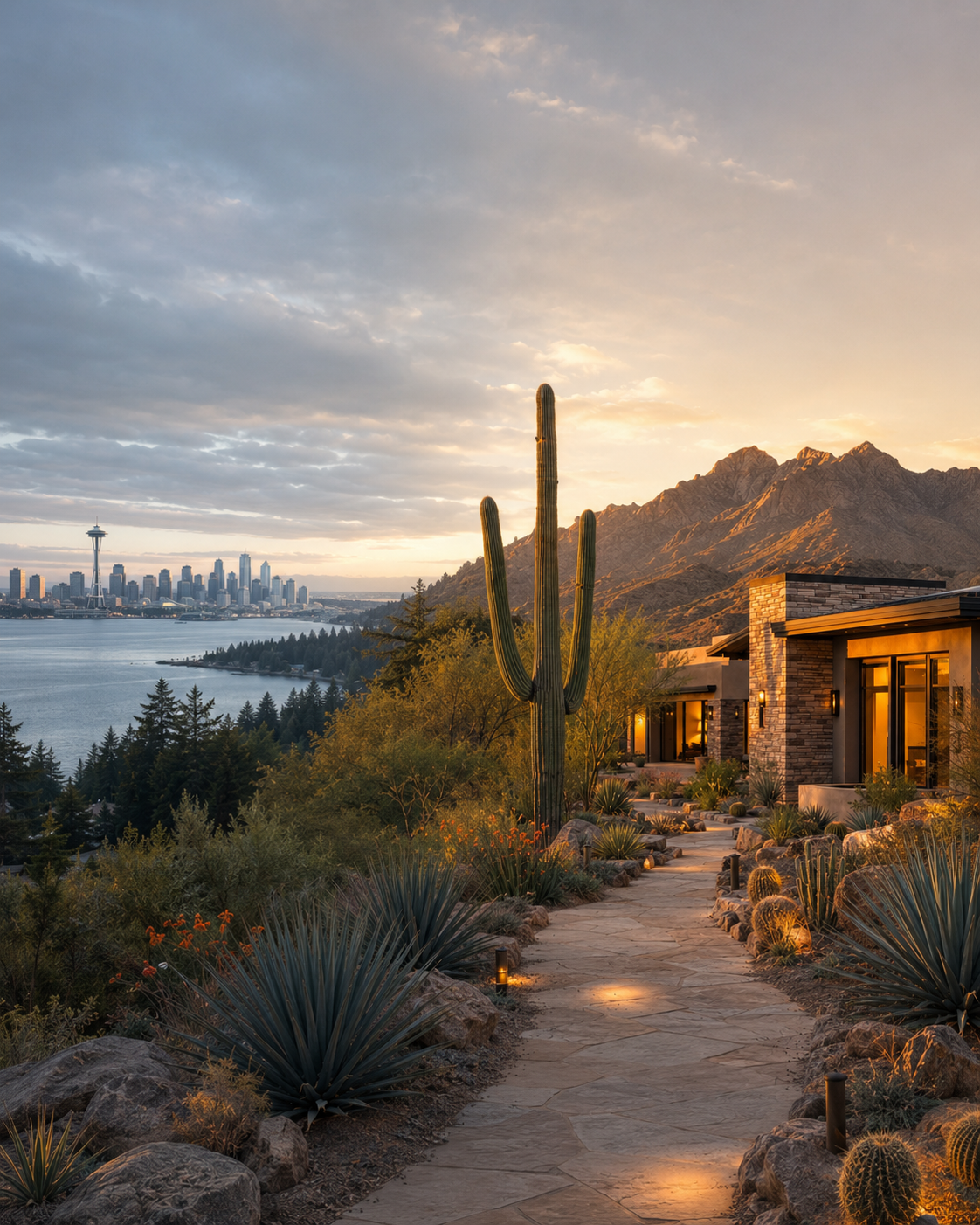
Relocating to Tucson from Seattle
Real estate guidance for people moving from the Greater Seattle area to Tucson and Southern Arizona.
I understand the move from both sides
Moving from Seattle to Tucson is not just a change of address. It is a major lifestyle and real estate transition.
You are moving from evergreen trees, water, ferries, rain and a densely layered housing market to desert light, dry heat, mountain views, wide-open space and communities that can feel completely different depending on where you land.
You may also need to decide what to do with your Seattle-area home, how to coordinate two housing markets and which Tucson neighborhood best fits the life you want to build.
Few real estate professionals can bring meaningful experience in both Greater Seattle and Tucson to the same relocation plan. I have spent more than two decades working in Greater Seattle real estate. I co-founded The Madrona Group, helped build a network of offices throughout the region and advised buyers and sellers across King County, Snohomish County and the broader Puget Sound market.
I also relocated from the Seattle area to Tucson with my own family. I understand the practical questions because I have faced them myself: what to do with a Seattle home, how to coordinate the timing, what Tucson neighborhoods actually feel like and which expenses are easy to underestimate.
Through Fox Real Estate, I now provide Tucson market guidance while remaining connected to the Seattle market through The Madrona Group. That allows me to help clients connect the sale or rental of a Washington property with the purchase of a home in Southern Arizona.
That is why relocating to Tucson requires more than a home search. It requires context, strategy and guidance from someone who understands both sides of the move.
What do you want your next chapter to feel like?
Before you compare homes, consider the routines, relationships, and activities you want your move to support. The new guide, Buying a Home for Your Next Chapter, offers five questions to bring to your search.
For the personal perspective behind my work in both markets, read Building the Next Chapter From Seattle to Tucson.
What changes when you move from Seattle to Tucson
Tucson can feel more affordable than Seattle, but lower purchase prices do not tell the entire story. The costs, systems and maintenance priorities simply change.
The climate changes the house
Seattle owners think about drainage, moisture, moss and heating. Tucson shifts the focus toward cooling, sun exposure, water use, stucco, pools and desert landscaping.
The monthly costs are different
Summer electricity, pool service, irrigation, insurance, solar agreements and HOA fees can matter as much as a lower purchase price.
Daily life is more location-sensitive
Driving distance, walkability, elevation, traffic patterns and access to amenities can feel very different even between nearby communities.
Home and ownership costs
- Property taxes and insurance
- Summer electricity and HVAC efficiency
- Pool service, repairs and water use
- Irrigation and desert landscaping
- Roof and exterior sun exposure
- HOA rules, amenities and transfer fees
Property and lifestyle details
- Solar leases, loans and ownership
- Sewer, septic and private wells
- Pests and wood-destroying organisms
- Longer drives in outlying communities
- Walkability and public transportation
- Monsoon drainage and water management
Tucson is not one market
The first goal is not to identify a house. It is to identify the Tucson lifestyle and location that make the right house possible.
Catalina Foothills
Mountain views, established luxury homes, desert architecture and convenient access to central Tucson.
Oro Valley
Golf, recreation, planned communities, newer housing and dramatic Catalina Mountain scenery.
Marana & Dove Mountain
Master-planned communities, resort living, golf, newer construction and access to northwest Tucson.
Central Tucson
Historic neighborhoods, mid-century homes, restaurants, cultural amenities and shorter cross-town drives.
Tanque Verde & Northeast
Larger lots, horse property, mountain views, desert privacy and access to trails and outdoor recreation.
Vail & Southeast
Newer communities, highly regarded schools, suburban amenities and a range of acreage opportunities.
Tucson Mountains
Rugged desert scenery, privacy, acreage, sunsets and proximity to Saguaro National Park West.
Green Valley & Sahuarita
Planned communities, active-adult options, golf, recreation and a quieter setting south of Tucson.
Also worth exploring: Tucson Estates and Southwest Tucson for approachable pricing, golf-oriented communities, desert views and larger-lot opportunities near the Tucson Mountains. Neighborhood boundaries, school assignments, pricing and property conditions should always be confirmed for the individual home.
Buying in the Tucson market
Two homes at similar prices may have very different operating costs, maintenance needs and long-term risks.
A Tucson purchase should be evaluated based on the complete property, not simply the list price or price per square foot. The inspection and due-diligence strategy needs to match the home, location and systems you are actually buying.
What should you do with your Seattle-area home?
That decision may determine your Tucson budget, financing, timing and tolerance for carrying two properties.
The correct strategy depends on your equity, monthly obligations, financing options, risk tolerance and relocation schedule. For most relocating clients, the Seattle property and Tucson purchase cannot be treated as unrelated transactions.
A plan for both sides of the move
You receive local support in both markets without having to assemble two unrelated plans on your own.
The value and timing of the Washington property influence the Tucson budget. The condition of the Tucson market may affect when you list, whether you buy first and how much temporary housing or financial overlap you should plan for.
My role is to help connect those decisions, identify risks early and create a plan that does not depend on every part of the move happening perfectly.
When you are ready to sell or evaluate your Seattle-area property, I remain connected to the Greater Seattle market through The Madrona Group, the real estate organization I co-founded.
Start with your life
Clarify the daily routine, community, property type and Tucson lifestyle you actually want.
Evaluate your Seattle property
Review value, equity, timing and the real tradeoffs between selling, buying first or keeping the home.
Build the Tucson budget
Account for the purchase, operating costs, inspections, moving expenses and any period of overlap.
Coordinate both transactions
Create a realistic timeline with backup options so one delay does not derail the entire move.
Seattle to Tucson relocation FAQ
A few of the questions worth answering before a moving date forces the decision.
Is Tucson really less expensive than Seattle?
Should I sell my Seattle home before buying in Tucson?
Which Tucson neighborhood feels most like the Seattle area?
What inspections matter most when buying a Tucson home?
How far ahead should I start planning the move?
Build a connected plan for your move to Tucson
Start with personalized neighborhood recommendations, realistic moving costs, Seattle property options and a clear relocation roadmap.
Information provided is for general planning purposes and is not a substitute for property-specific real estate, lending, tax, legal, insurance or inspection advice.