
How Competitive Is the Tucson Luxury Real Estate Market?
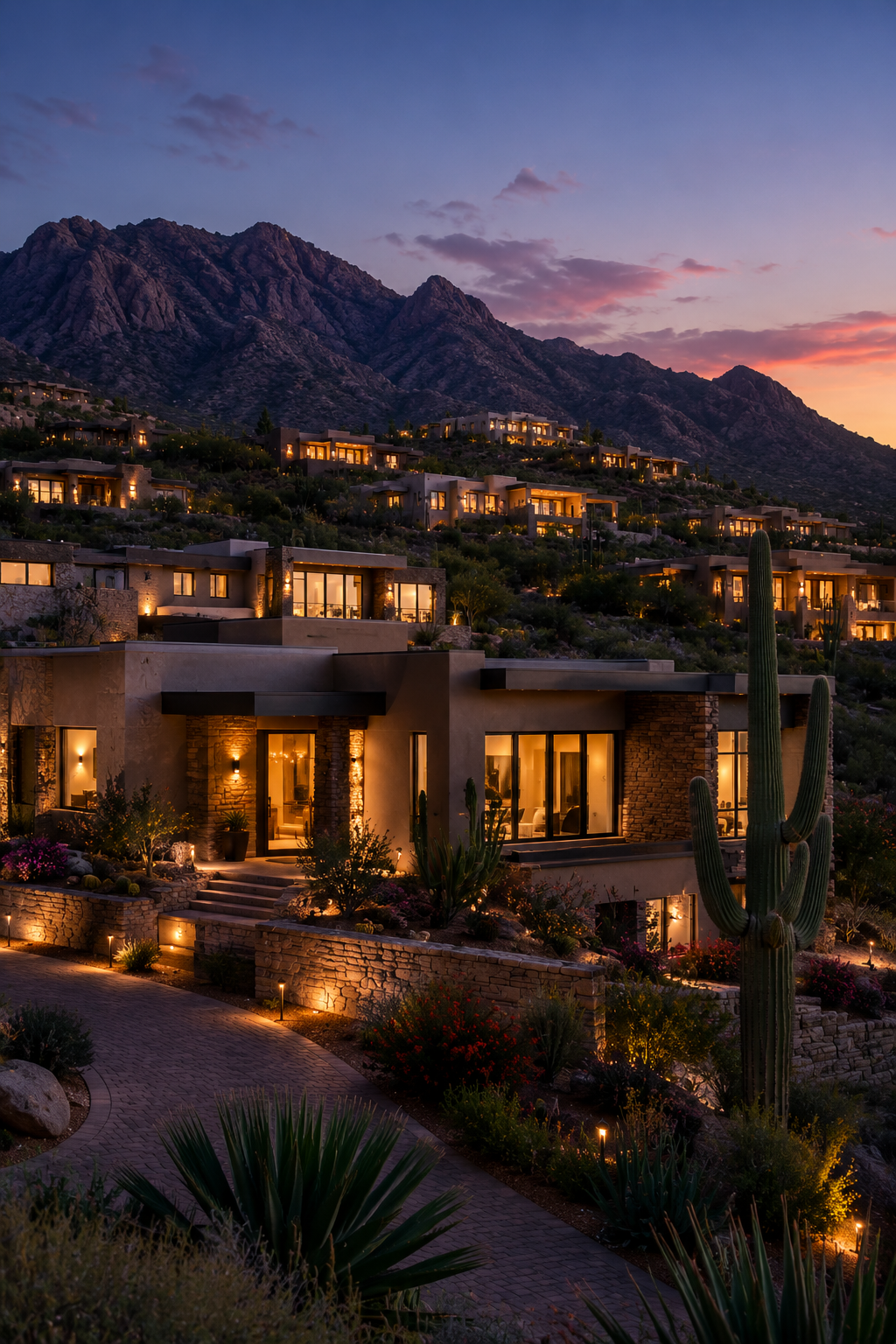
The Tucson luxury real estate market is competitive in certain price ranges and neighborhoods, but competition is usually centered around rarity and lifestyle rather than volume alone.
Luxury buyers in Tucson are often searching for properties that stand out because of:
• exceptional mountain views
• custom design
• premium desert settings
• resort-style outdoor spaces
• golf community access
• architectural quality
• privacy and exclusivity
• proximity to high-end amenities
Unlike traditional residential markets, luxury competition is often strongest for homes that feel difficult to replace.
Properties in the Catalina Foothills, Ventana Canyon, Stone Canyon, and Dove Mountain can attract strong buyer attention when they combine location, presentation, and lifestyle appeal in a way buyers cannot easily find elsewhere.
Why Some Tucson Luxury Homes Receive Multiple Offers
Competition in the Tucson luxury real estate market is rarely driven by sheer inventory shortages alone. Instead, it is usually driven by highly specific buyer demand for properties that offer a combination of location, architecture, privacy, and lifestyle features that are difficult to duplicate.
Luxury buyers in Tucson are often less price-sensitive than traditional residential buyers. What matters more is whether a property checks boxes that are genuinely rare within the market.
Homes that tend to generate the strongest competition often include:
• unobstructed Catalina Mountain views
• elevated lots with city-light views
• modern desert architecture
• extensive outdoor entertaining areas
• resort-quality pools and spas
• guest houses or casitas
• golf course frontage
• gated community locations
• large private acreage
• updated luxury finishes
• seamless indoor-outdoor living design
In neighborhoods like Catalina Foothills, Ventana Canyon, Stone Canyon, and Dove Mountain, buyers are often competing for lifestyle opportunities as much as the physical home itself.
For example, two luxury homes may have similar square footage and pricing, but the property with panoramic mountain views, superior outdoor living, and a premium lot location may receive significantly more attention and stronger offers.
This is especially true because many luxury buyers relocating to Tucson are specifically seeking features that are difficult to find in other markets, including:
• desert resort-style living
• year-round outdoor entertainment
• privacy without sacrificing convenience
• golf and club access
• sunset and mountain view corridors
• custom architectural character
As a result, the most competitive Tucson luxury properties are usually the homes buyers emotionally connect with immediately because they feel unique, irreplaceable, and aligned with the Tucson lifestyle buyers envision when moving to Southern Arizona.
Inventory Levels Matter More at Certain Luxury Price Points
The level of competition in the Tucson luxury market can vary dramatically depending on the price range, neighborhood, and type of property involved.
Some luxury segments may feel highly competitive with limited inventory and multiple interested buyers, while other segments can move much more slowly because the buyer pool becomes increasingly specialized as prices rise.
In general, competition tends to increase when luxury homes are positioned in what many buyers consider the “core” Tucson luxury ranges, particularly when properties are priced appropriately for current market conditions.
In Tucson, stronger competition is often seen in homes that fall within price points where buyers perceive the property as offering exceptional lifestyle value compared to other luxury markets like:
• Scottsdale
• Southern California
• Seattle
• Denver
• Austin
Many relocating buyers view Tucson luxury real estate as relatively affordable for the level of space, views, privacy, and custom construction available.
That creates additional demand for properties that offer:
• move-in-ready condition
• modernized interiors
• premium Foothills locations
• newer construction
• energy-efficient features
• high-end outdoor living
• gated community security
• low-maintenance luxury living
At the same time, ultra-high-end properties can experience a smaller buyer pool simply because fewer buyers are actively searching at those price levels.
For example, a luxury home priced at $1.5 million in a highly desirable Foothills neighborhood may attract far more activity than a $6 million estate that appeals to a much narrower audience.
This is one reason luxury market conditions in Tucson often need to be analyzed by micro-market rather than broad citywide statistics.
A luxury condo near high-end amenities may experience completely different demand patterns than a large desert estate in a more secluded location, even if both properties fall under the same “luxury” category.
Buyers and sellers who understand these differences usually make better pricing, negotiation, and timing decisions because they are evaluating the actual competition within their specific luxury segment rather than relying on general market headlines.
Luxury Buyers in Tucson Behave Differently Than Traditional Buyers
One of the biggest reasons the Tucson luxury market operates differently is because luxury buyers typically make decisions based on lifestyle alignment rather than urgency alone.
Traditional residential buyers are often heavily influenced by factors like:
• mortgage rates
• monthly payment changes
• commuting needs
• school timing
• inventory shortages
Luxury buyers are usually more focused on:
• long-term lifestyle goals
• architectural quality
• privacy
• exclusivity
• property uniqueness
• overall experience
That means competition in the luxury market can intensify very quickly when a home delivers a rare emotional connection or a difficult-to-replicate experience.
Emotional Appeal Drives Luxury Competition
For example, buyers touring multiple luxury homes may wait months before making an offer. But when a property combines:
• exceptional mountain views
• privacy
• modern luxury finishes
• strong architectural design
• seamless indoor-outdoor flow
• premium location
the same buyers may suddenly act very aggressively.
This is why luxury homes in Tucson often receive highly motivated offers shortly after hitting the market when presentation and positioning are done correctly.
Unlike traditional markets where buyers may focus primarily on price per square foot, luxury buyers often ask themselves:
“Can I realistically replace this exact lifestyle opportunity if I lose this home?”
If the answer is no, competition tends to increase quickly.
Relocation Buyers Influence Tucson Luxury Demand
In many cases, luxury buyers are also relocating from larger and more expensive metro markets.
Buyers moving from places like Seattle, Los Angeles, San Francisco, or Denver may view Tucson luxury pricing very differently than local buyers.
A property that feels expensive to a local buyer may still feel like strong value to a relocating luxury buyer who is comparing Tucson to other high-end Western markets.
These buyers are often specifically seeking:
• year-round outdoor living
• mountain scenery
• resort-style properties
• gated communities
• golf access
• lower density living
• luxury homes with more land and privacy
That dynamic can create stronger competition for premium Tucson properties that align with those expectations.
Presentation and Marketing Matter Enormously
Luxury competition is also heavily influenced by how the property is presented to buyers online and in person.
Luxury buyers tend to respond strongly to:
• professional photography
• cinematic video
• twilight imagery
• strong staging
• clean architectural presentation
• professionally designed outdoor spaces
• polished marketing materials
Homes that fail to create immediate visual impact online may receive dramatically less buyer activity even when the home itself is exceptional.
This creates a situation where two similar luxury homes can perform very differently based entirely on:
• marketing quality
• pricing strategy
• presentation
• emotional appeal
• perceived exclusivity
In the Tucson luxury market, presentation often directly affects competitiveness.
Competition Is Highly Neighborhood Specific in Tucson Luxury Real Estate
One of the most important things buyers and sellers need to understand is that the Tucson luxury market is extremely neighborhood specific.
Luxury competition can vary dramatically depending on:
• elevation
• views
• golf access
• gated security
• lot size
• proximity to amenities
• architectural style
• overall neighborhood reputation
Two homes with similar pricing may experience completely different levels of buyer activity simply because they are located in different luxury communities.
Certain Luxury Communities Consistently Generate Strong Demand
Neighborhoods like Catalina Foothills, Stone Canyon, Ventana Canyon, and Dove Mountain often attract strong buyer attention because they offer combinations of:
• luxury custom homes
• mountain views
• privacy
• golf amenities
• gated access
• resort-style surroundings
• elevated desert scenery
Buyers searching in these communities are often highly targeted in what they want.
Many are not simply looking for “a luxury home in Tucson.” They are specifically searching for:
• a golf course property
• a modern desert contemporary home
• a view-oriented hillside estate
• a lock-and-leave luxury residence
• a private desert retreat
• a luxury home near hiking and outdoor recreation
That specificity can create intense competition when the right property enters the market.
Unique Homes Often Outperform the Overall Market
Luxury real estate in Tucson is rarely a completely uniform market.
Even during slower periods, highly desirable homes can still sell quickly if they offer features buyers struggle to find elsewhere.
Properties that often outperform the broader market include homes with:
• panoramic Catalina Mountain views
• premium elevated lots
• updated contemporary design
• exceptional outdoor entertainment areas
• strong privacy buffers
• luxury guest accommodations
• rare architectural character
In contrast, luxury homes with outdated finishes, compromised locations, or less desirable layouts may sit on the market significantly longer even within the same price range.
This is one reason broad market statistics can sometimes be misleading in luxury real estate.
The homes buyers compete hardest for are usually the properties that feel distinctive, emotionally compelling, and difficult to replace.
Timing and Seasonal Demand Can Also Affect Competition
Luxury activity in Tucson often fluctuates seasonally because a significant percentage of high-end buyers are relocating, purchasing second homes, or visiting Arizona during peak weather months.
Competition frequently increases during periods when:
• seasonal residents are in town
• relocation activity rises
• winter visitors are actively touring homes
• buyers are escaping colder climates
• luxury inventory remains limited
This can create situations where luxury homes receive stronger activity during certain parts of the year even if broader market headlines appear relatively stable.
Because Tucson attracts many lifestyle-driven buyers, timing, presentation, and property uniqueness often work together to determine how competitive a luxury listing becomes.
Bottom Line
The Tucson luxury real estate market can be competitive, but competition is usually driven by property uniqueness, lifestyle appeal, and location quality rather than simple inventory shortages alone.
Luxury buyers in Tucson are often searching for homes that feel difficult to replace because of:
• mountain views
• architectural quality
• privacy
• resort-style outdoor living
• golf access
• premium desert settings
• gated community locations
• custom design features
When a luxury home combines those elements with strong presentation and realistic pricing, buyer competition can increase quickly.
At the same time, not every luxury property experiences the same level of demand. Competition can vary significantly depending on:
• neighborhood
• price range
• condition
• lot quality
• design style
• marketing strategy
• seasonality
That is why understanding the specific luxury segment, buyer expectations, and neighborhood dynamics matters far more than relying on general market headlines.
For buyers, preparation and fast decision-making often matter when highly desirable properties become available.
For sellers, pricing strategy, presentation quality, and lifestyle-focused marketing usually play a major role in determining how competitive a luxury listing becomes in the Tucson market.
FAQ
Is the Tucson luxury real estate market competitive?
Yes, certain segments of the Tucson luxury market can become highly competitive, especially when homes offer premium views, strong architecture, privacy, gated access, and resort-style outdoor living that buyers cannot easily replace.
Which Tucson luxury neighborhoods are the most competitive?
Luxury competition is often strongest in areas like Catalina Foothills, Ventana Canyon, Stone Canyon, Dove Mountain, and other high-demand communities known for views, golf access, and custom luxury homes.
Why do some luxury homes receive multiple offers?
Luxury homes often attract multiple offers when they combine location, presentation, pricing, and unique lifestyle features that create strong emotional appeal for buyers.
Do luxury homes sell differently than traditional homes in Tucson?
Yes. Luxury buyers are usually more focused on lifestyle, exclusivity, design quality, and long-term value rather than simply price or timing alone.
What features make Tucson luxury homes more competitive?
Features that often increase competition include mountain views, golf course locations, modern desert architecture, privacy, large outdoor entertaining spaces, guest houses, gated communities, and updated luxury finishes.