
How to Price a Luxury Home in Tucson
(High-End Pricing Strategy Explained)
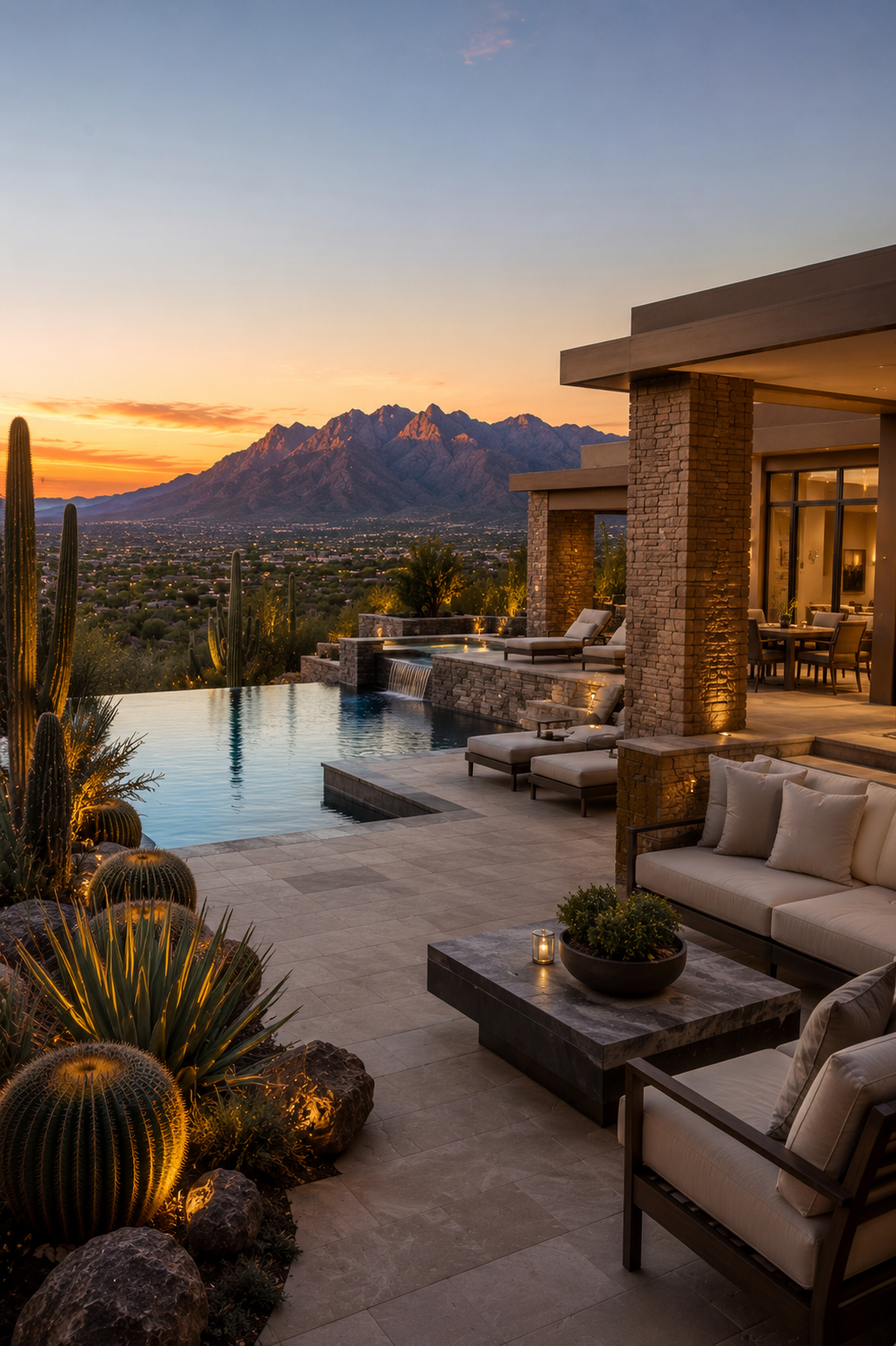
Pricing a luxury home in Tucson is not the same as pricing a standard home.
At the high end, there are:
fewer buyers
fewer comparable sales
more unique properties
That means pricing is less about data and more about positioning.
Two homes with similar features can sit at very different price points depending on:
how they are presented
how they compare to current competition
how buyers perceive their value
Luxury buyers are not just analyzing numbers.
They are evaluating: uniqueness, experience and how the home compares to other high-end options.
This is why pricing incorrectly in the luxury market has a bigger impact.
There are fewer buyers, and they are more selective.
If you miss the mark, the home can sit for a long time.
This page breaks down how to price a luxury home the right way so you attract serious buyers and maintain leverage throughout the process.
Why Overpricing Hurts More in the Luxury Market
Overpricing is a problem in any market.
In the luxury market, it is amplified.
There Are Fewer Buyers
At higher price points, the buyer pool is smaller.
That means:
fewer showings
fewer second chances
less margin for error
If you miss the right price, you do not just slow things down.
You miss a significant portion of your potential buyers entirely.
Luxury Buyers Are More Selective
High-end buyers are not browsing casually.
They are:
well-informed
comparing multiple properties
looking for clear value
If a home feels overpriced, they do not try to negotiate.
They move on.
First Impressions Matter More
Luxury listings get the most attention when they first hit the market.
That early window is critical.
If the price does not match expectations:
serious buyers disengage
agents skip the showing
momentum is lost
And in the luxury market, momentum is harder to rebuild.
Long Time on Market Damages Perception
When a luxury home sits, buyers assume:
it is overpriced
something is wrong
the seller may become negotiable
This weakens your position.
Even if the home is later priced correctly, it often:
attracts lower offers
faces stronger negotiation
Price Reductions Carry More Weight
In the luxury segment, price reductions are watched closely.
They signal:
previous overpricing
shifting expectations
potential opportunity for buyers
Instead of creating excitement, they often invite negotiation.
The Competition Is Strong
Luxury buyers compare homes differently.
They are not just looking locally.
They may be comparing:
multiple neighborhoods
different cities
even different states
If your home does not align on value, they have options.
The Cost of “Testing the Market”
Starting high to “see what happens” is one of the most expensive strategies.
What actually happens:
your best buyers pass early
your listing loses urgency
you end up chasing the market down
And in many cases, selling below where you could have started.
The Pattern
Overpriced luxury homes tend to:
sit longer
lose momentum
require reductions
sell for less than expected
The Right Way to Think About It
In the luxury market, pricing is not about pushing limits.
It is about positioning correctly from the start.
The Key Question
“Does this home clearly justify its price compared to the best options available?”
If the answer is yes, buyers engage.
If not, they move on quickly.
How to Position a Luxury Home to Attract the Right Buyers
In the luxury market, pricing is only part of the equation.
Positioning is what determines who shows up.
And the goal is not to attract everyone.
It is to attract the right buyers.
You Are Competing at a Different Level
Luxury buyers are not just comparing homes.
They are comparing:
lifestyle
experience
uniqueness
Your home is not competing with every listing.
It is competing with the best options available at that price point.
Define What Makes the Home Stand Out
Every luxury property needs a clear identity.
That could be:
panoramic mountain views
extreme privacy
architectural design
indoor-outdoor living
resort-style backyard
If a buyer cannot quickly understand what makes the home special, it blends in.
Presentation Has to Match the Price Point
At this level, expectations are high.
That means:
professional photography (not just good—exceptional)
clean, staged interiors
strong visual flow
Online presentation is where most buyers first experience the home.
If it does not stand out there, they never schedule a showing.
Tell a Clear Story
Luxury homes sell best when they tell a story.
Not just features, but experience.
Examples:
“Private desert retreat with unobstructed Catalina views”
“Modern foothills estate designed for indoor-outdoor living”
This helps buyers immediately understand where the home fits.
Target the Right Buyer Profile
Not every luxury buyer is the same.
Some prioritize:
views and privacy
Others care more about:golf and community
Others want:modern design and convenience
Positioning should align with the buyer most likely to connect with the home.
Pricing and Positioning Must Align
You cannot separate these two.
If the home is positioned as:
a premium view property
a high-design modern home
a private estate
The price must support that story.
If it does not, buyers feel the disconnect immediately.
Exposure Matters More at the High End
Luxury buyers are not always local.
They may come from:
other states
second-home markets
relocation situations
This means exposure needs to go beyond just listing the home.
The right buyers need to see it.
The Pattern You Will See
Well-positioned luxury homes:
attract the right buyers quickly
create stronger emotional reactions
generate more serious interest
sell with better terms
Poorly positioned homes:
feel unclear
attract the wrong buyers
sit longer
require price adjustments
The Right Way to Think About It
You are not just listing a home.
You are presenting a product in a specific market segment.
The Key Question
“Why would the right buyer choose this home over every other option available?”
If that answer is clear, the positioning is working.
How Location Within Tucson Impacts Luxury Pricing
At the luxury level, “Tucson” is not one market.
It is a collection of micro-markets.
And where a home sits within those markets has a major impact on value.
Not All Luxury Areas Perform the Same
Luxury buyers are highly specific about location.
Some of the most sought-after areas include:
Catalina Foothills
Oro Valley
Dove Mountain
Stone Canyon
Ventana Canyon
Each of these areas offers a different experience.
And that experience directly impacts pricing.
Foothills vs Valley Locations
Homes in the foothills typically command higher prices because they offer:
elevation
better views
more privacy
closer proximity to the mountains
Homes in flatter valley areas may:
have larger lots
offer different lifestyle benefits
but often lack the same visual impact
Proximity to Amenities Matters
Luxury buyers still care about convenience.
Location impacts access to:
golf courses
country clubs
dining and shopping
hiking and outdoor recreation
Homes that balance privacy with accessibility tend to perform better.
Community Reputation Drives Demand
Certain communities carry stronger recognition.
That creates:
higher demand
more consistent pricing
stronger resale value
Buyers often search for specific communities first, then evaluate homes within them.
New vs Established Areas
Some buyers prefer:
newer construction
modern layouts
updated infrastructure
Others prefer:
established neighborhoods
mature landscaping
proven long-term value
Both can perform well, but they attract different buyers.
Micro-Location Within the Same Area
Even within the same community, value can vary.
Differences include:
lot positioning
proximity to main roads
view corridors
privacy levels
Two homes in the same neighborhood can feel completely different.
The Pattern You Will See
Homes in stronger locations:
attract more consistent demand
hold value better over time
sell faster
Homes in weaker or less desirable pockets:
require more strategic pricing
face more competition
rely more on features to stand out
The Right Way to Think About It
At the luxury level, location is not just a box to check.
It is one of the primary drivers of value.
The Key Question
“How does this specific location compare to the best options in the market?”
That answer is what ultimately defines pricing power.
How Buyer Psychology Impacts Luxury Pricing
At the luxury level, pricing is not just about numbers.
It is about perception.
And perception is driven by buyer psychology.
Luxury Buyers Do Not “Shop” the Same Way
Most luxury buyers are not:
stretching to afford the home
looking for the cheapest option
They are looking for:
the right property
the right experience
something that stands out
That changes how they react to price.
Price Signals Value
In the luxury market, price is part of the marketing.
Buyers interpret pricing as:
a signal of quality
a signal of exclusivity
a signal of how the home compares
If a home is priced too low, buyers may question:
what is wrong with it
whether it truly belongs in that price tier
If it is priced too high without justification, they disengage.
Buyers Are Comparing Emotionally and Logically
Luxury buyers balance two things:
emotional connection
logical comparison
They ask:
“Do I love this home?”
“Does it make sense compared to others?”
If either side does not align, they hesitate.
The “Shortlist Effect”
Most luxury buyers narrow down to a small number of homes.
Usually:
2 to 5 properties
If your home does not make that shortlist, it is out.
Pricing plays a major role in whether it gets included.
Urgency Works Differently at the High End
In lower price points, urgency often comes from competition.
In luxury, urgency comes from:
rarity
uniqueness
fear of missing the right property
If your home feels:
replaceable → buyers wait
unique → buyers act
Negotiation Starts With Perception
Before any offer is written, buyers are already forming their negotiation strategy.
If the home feels:
well-priced → stronger, cleaner offers
overpriced → aggressive negotiation or no offer
That mindset is set before they even step inside.
The Pattern You Will See
Homes aligned with buyer psychology:
attract more serious interest
create emotional connection
receive stronger offers
Homes that miss this:
feel overpriced or unclear
attract hesitant buyers
sit longer and negotiate harder
The Right Way to Think About It
Luxury pricing is not about pushing the number higher.
It is about aligning price with how buyers think and feel.
The Key Question
“What will a luxury buyer believe about this home the moment they see the price?”
That belief determines whether they engage or move on.
Common Mistakes Sellers Make When Pricing a Luxury Home
By the time a luxury home hits the market, the same pricing mistakes show up repeatedly.
At this level, those mistakes cost more time and more money.
Treating Luxury Pricing Like Standard Pricing
Luxury homes are not priced the same way as typical homes.
Sellers who rely too heavily on:
price per square foot
broad market averages
generic comps
often miss how buyers actually evaluate high-end properties.
Pricing Based on Emotion or Investment
Sellers often think:
“I have this much into the home”
“This is what it’s worth to me”
Luxury buyers do not care about that.
They compare your home to:
the best alternatives available
what feels right at that price point
Not Aligning Price With Positioning
If a home is positioned as:
a premier view property
a private estate
a high-design home
The price must match that level.
If it does not, buyers feel the disconnect immediately.
Ignoring Early Market Feedback
In the luxury market, feedback comes quickly.
If there are:
few showings
no serious inquiries
repeated hesitation
That is not coincidence.
That is pricing feedback.
Waiting too long to adjust leads to longer market time and weaker results.
Overestimating Buyer Pool
Not every buyer in a price range is a real buyer.
Luxury buyers are:
selective
patient
willing to wait for the right property
If your home does not align, they simply move on.
The Pattern
Luxury homes that struggle with pricing tend to:
sit longer
lose early momentum
require reductions
sell below initial expectations
The Right Way to Avoid It
Focus on:
how the home compares to the best options
how buyers will perceive value
aligning pricing with positioning
Bottom Line
Pricing a luxury home in Tucson is about precision.
Not guesswork.
The homes that perform best are the ones that:
are priced to match their positioning
clearly justify their value
attract the right buyers early
create strong initial momentum
When pricing is done correctly:
buyers engage quickly
perception stays strong
negotiation improves
final outcomes are better
Luxury pricing is not about reaching higher.
It is about aligning perfectly.
Related Tucson Real Estate Posts
FAQ
How do you price a luxury home in Tucson?
Luxury homes are priced based on positioning, buyer perception, and comparison to other high-end properties, not just square footage or basic comps.
Why is pricing more difficult in the luxury market?
There are fewer comparable sales, fewer buyers, and more unique properties, which makes pricing more dependent on strategy and positioning.
What happens if a luxury home is overpriced?
It often sits longer, loses early momentum, and eventually requires price reductions that weaken negotiating position.
Do luxury buyers negotiate more?
They negotiate based on perceived value. If a home is priced correctly, negotiations are often cleaner. If overpriced, they become more aggressive or disengage.
What is the most important factor in luxury pricing?
Alignment between price, positioning, and buyer perception. When those match, the home attracts the right buyers and performs better.